Pax Romana ICMICA/MIIC is
- An international Association of Catholic professionals and intellectuals composed of local federations, groups and individuals,
- An open forum for intellectual sharing and dialogue among different cultures, generations and professions,
- A social movement for empowerment, advocacy and solidarity for a peaceful, equitable and sustainable world,
- A global network of ideas, insights and commitment based on a Christian vision and mission,
- A member of the Conference of International Catholic Organizations (ICOs) recognized by the Holy See,
- A member of Conference of Non-Governmental Organizations in consultative relationship with the United Nations (CONGO)
- A member of the global coalition for the Earth Charter campaign
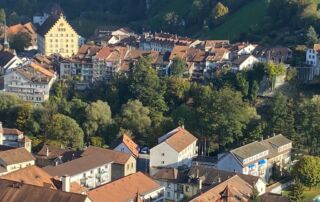
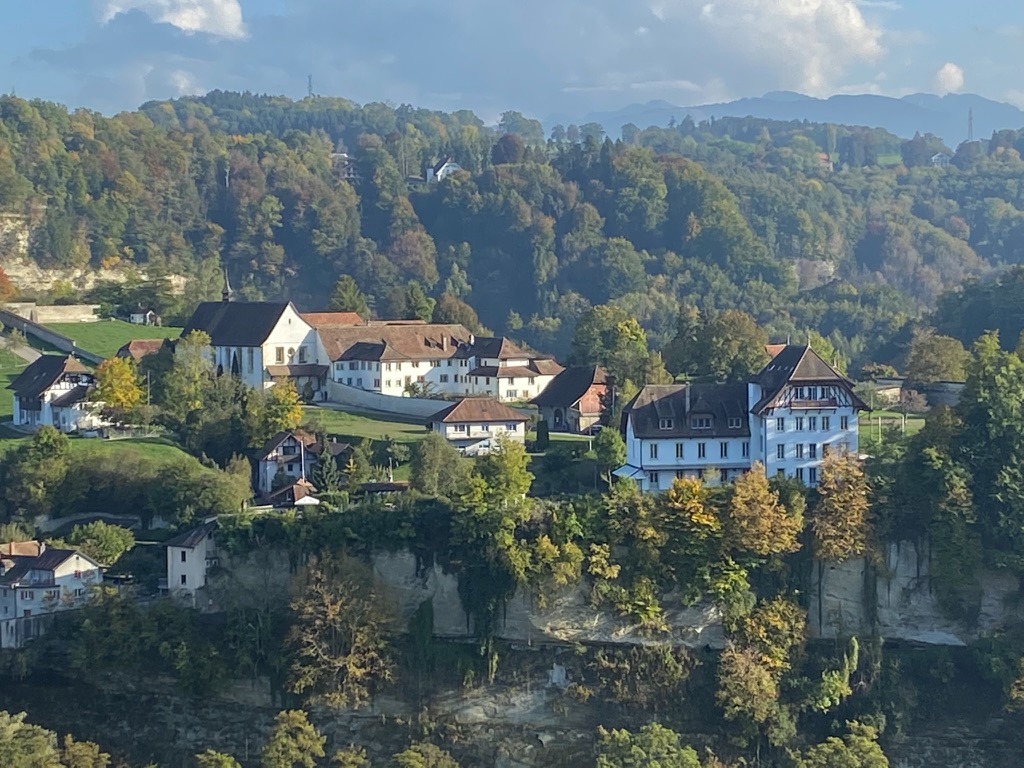
Was founded in Rome in April 1947 as an international association of Catholic professionals and intellectuals. However, its historical roots can be traced back to 1921 when Pax Romana was created as an international association of Catholic university students based in Fribourg, Switzerland.
The name Pax Romana is shared with our sister movement, International Movement of Catholic Students (IMCS) based in Paris, France. The International Secretariat is presently located in Geneva, Switzerland.
[Intervention] Conférence internationale des ONG à l'UNESCO Intervention de la représentante des Etudiants du Mouvement international Pax Romana
Conférence internationale des ONG à l'UNESCO Intervention de la représentante des Etudiants
du Mouvement international Pax Romana
[statement] Joint Statement on the Principle of Non-Refoulement and the Recent Forced Deportations of the Uighurs from Cambodia and the Lao Hmong from Thailand
Joint Statement on the Principle of Non-Refoulement and the Recent Forced Deportations of the Uighurs from Cambodia and the Lao Hmong from Thailand
The Fall of the Berlin Wall-20th Anniversary Moving into a new Europe

Personal testimonies of the revolutionary events of 1989 were given by Barbara Coudenhove-Kalergi an Austrian journalist and Jozsef Szikora from Hungarian Radio during a joint Newman Association/ Pax Romana (Europe) conference held at High Leigh Conference Centre last weekend to mark the 20th anniversary of the fall of the Berlin Wall. Barbara described the events in different Eastern European countries leading up to the fall of the Wall and Jozsef talked about the difficulties in his early professional life caused by not being a member of the Hungarian Communist Party. Brian Hanrahan of the BBC gave an exciting account of his efforts to film events in East Germany in 1989 and brought us up to date with his visit earlier in the week to the 20th anniversary celebrations in Berlin.
Global Governance, Global Justice: Africa as a Symbol and a Reality - Final Statement
More than 300 participants from all Catholic dioceses of Kenya and representatives of more than 40 countries of all continents gathered in Nairobi, Kenya from July 20 to 26, 2008 around the theme of "Global Governance, Global Justice: Africa as a Symbol and a Reality" for an International Conference organized by Pax Romana ICMICA MIIC
Structural Transformation and Personal Coherence
In recent years, the problem of structural violence has developed in various parts of the world. In Latin America, it has become common over the last several decades to incorporate reflection on such structural dimensions into social analysis. This has been part of an intellectual tradition which seeks to explain poverty and inequality by stressing the role played by economic and political structures. Such a structural perceptive in social analysis certainly includes various schools of thought. This reality of violence is characterized by misery and unemployment which especially affects families. On top of this, the reality in Latin America is characterized by an additional feature: great social and regional inequalities. All of these features make it possible to characterize a situation injustice, a situation of institutionalized violence.